Key takeaways
- Sublingual means under the tongue — the drug absorbs through mucous membranes straight into the bloodstream.
- That route skips first-pass metabolism, where the liver destroys much of a swallowed dose.
- Onset is faster: minutes rather than the 30–90 the gut typically needs.
- It only works for the right molecules — small, lipid-friendly, and potent at low doses.
- Technique matters. Swallowing the tablet, or drinking too soon, throws away the advantage.
Most people never think about how a medication gets in. You swallow the tablet, the tablet works, end of story. But route of administration is one of the biggest levers in pharmacology — it determines how much of a dose actually reaches your bloodstream, how fast it gets there, and in some cases whether the drug is viable at all.
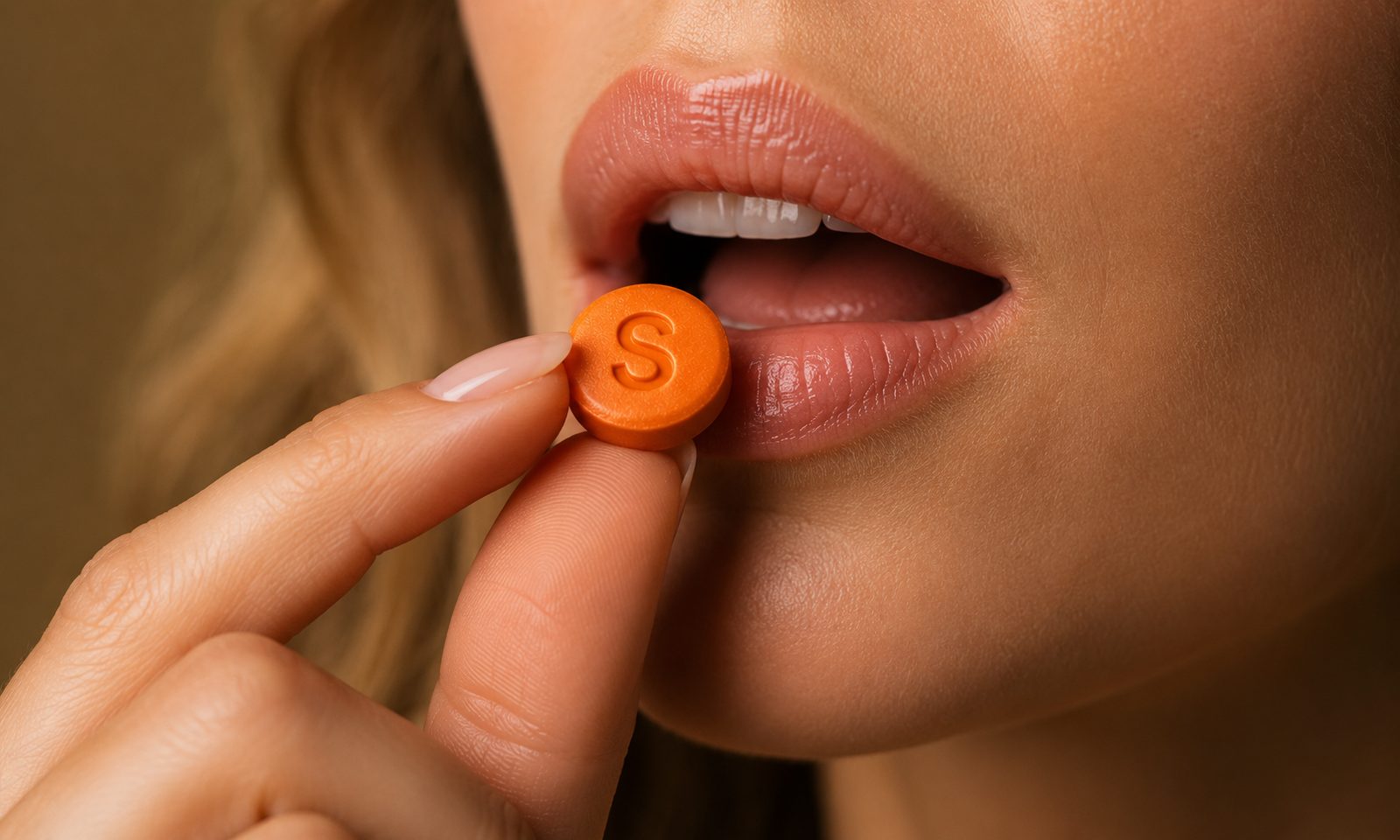
Sublingual delivery is one of the more elegant answers to that problem, and it's why several of our therapies come as a small tablet you hold under your tongue rather than something you swallow or inject.
What sublingual actually means
The floor of your mouth is unusually well suited to absorption. The tissue is thin, richly supplied with blood vessels, and sits just millimetres from veins that drain directly into systemic circulation. Place a suitable compound there and it dissolves into saliva, crosses that membrane, and enters the bloodstream without passing through the digestive tract at all.
Buccal delivery — inside the cheek — works on the same principle with slightly slower kinetics. Both are grouped as oral transmucosal routes, and both exist for one reason: to avoid what the gut and liver do to a swallowed dose.
The question isn't how much you took. It's how much arrived.
The Everlife Clinical Team
The first-pass problem
Anything you swallow takes a specific path: stomach, small intestine, then straight to the liver through the portal vein before it ever reaches the rest of your body. The liver's job at that checkpoint is to metabolize foreign compounds — and it's very good at it.
This is called first-pass metabolism, and for some drugs it's brutal. A molecule can be well absorbed from the gut and still arrive at its target at a fraction of the swallowed dose, because the liver cleared most of it on the way through. Peptides fare worse still: stomach acid and digestive enzymes break many of them into inactive fragments before absorption is even on the table.
Sublingual delivery routes around that checkpoint. Bioavailability rises, dose-to-dose variability falls, and you need less active ingredient to reach the same blood level.
Speed, and when it matters
A swallowed tablet typically takes 30 to 90 minutes to reach peak blood levels, depending on what else is in your stomach. Sublingual absorption starts within a minute or two and often peaks inside 15.
For a daily maintenance therapy, that speed is a convenience. For anything you take in response to a moment — the classic example being nitroglycerin for angina — it's the entire point. It also makes dosing more predictable: nothing is waiting behind a meal, and a large dinner doesn't change the outcome.
Sublingual versus injections
Injection remains the gold standard for bioavailability — nothing beats putting a compound directly into tissue or bloodstream. But it comes with real friction: needles, sharps disposal, cold-chain storage, reconstitution steps, and a learning curve that some people never get comfortable with.
Sublingual sits in a useful middle. It gives up some bioavailability relative to a shot and gains adherence, which for a therapy you're meant to take daily for months is frequently the more important variable. The best protocol is the one that actually gets taken.
- Injection — highest and most predictable absorption; most friction.
- Sublingual — high absorption, fast onset, no needles.
- Swallowed — most familiar; largest losses to first-pass metabolism.
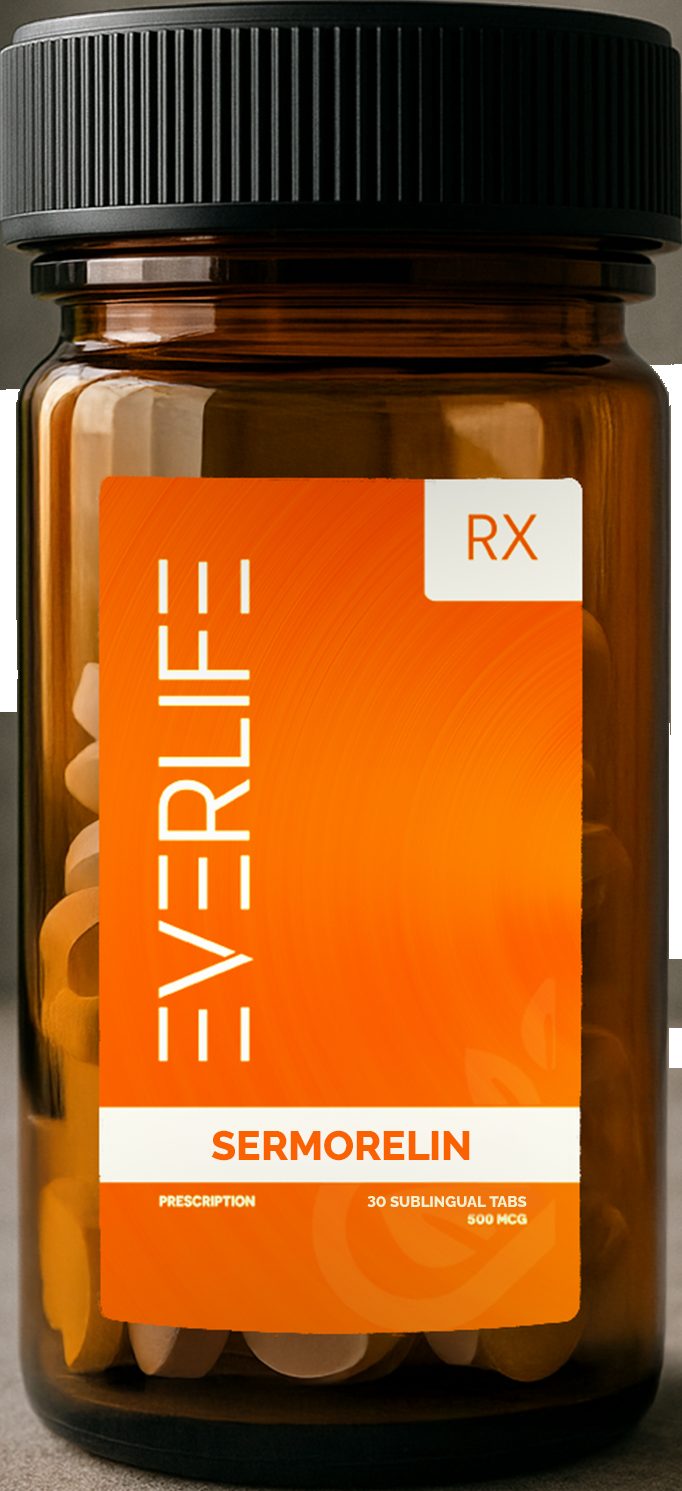
Sermorelin
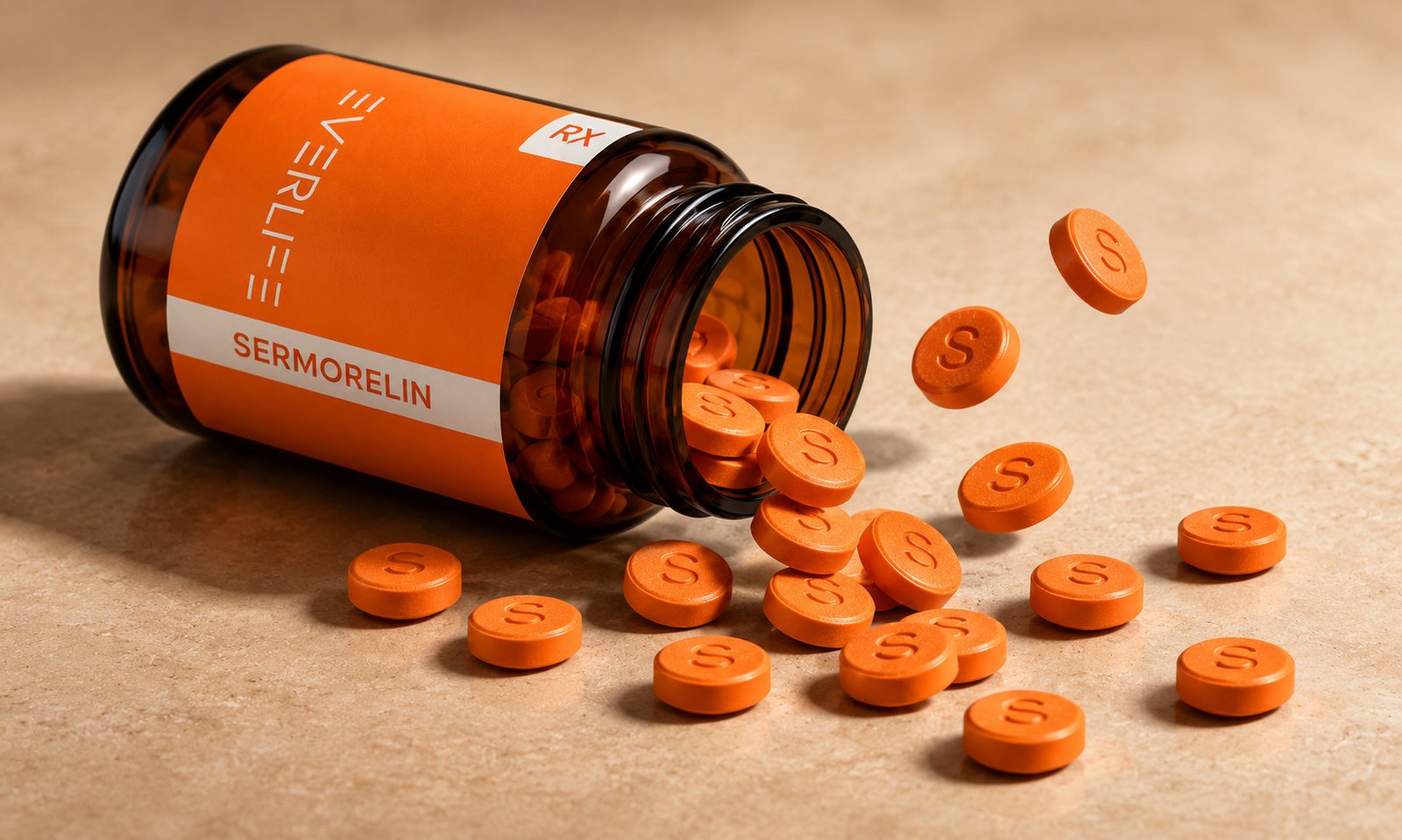
Thirty sublingual tablets at 500 mcg — sermorelin dosed for absorption under the tongue rather than through the gut, so the peptide never meets stomach acid.
See the formula →What works sublingually — and what doesn't
The route isn't universal. A compound has to clear three bars to be a good sublingual candidate:
- Small enough. Large molecules can't cross the mucous membrane efficiently.
- Lipid-friendly enough. Some fat solubility is required to move through the tissue.
- Potent enough. Only a small volume can dissolve under the tongue, so the dose has to be modest.
Peptides and hormones frequently fit. Anything requiring a gram-scale dose — most vitamins in therapeutic amounts, for instance — does not, which is why those stay oral or injectable. Formulation matters as much as the molecule: the same active ingredient in the wrong base won't dissolve fast enough to absorb before you swallow it.
How to take one properly
The technique is simple, and getting it wrong quietly converts a sublingual dose into a swallowed one:
- Place the tablet under your tongue, toward the side rather than dead centre.
- Let it dissolve fully — usually one to three minutes. Don't chew it.
- Don't swallow deliberately while it dissolves; keep saliva where it is.
- Wait about ten minutes before eating or drinking.
- Take it consistently — same time each day, on an empty-ish mouth.
What we use it for
Several Everlife therapies are formulated sublingually specifically because the alternative would be a daily injection or a heavily degraded oral dose. Sermorelin is the clearest example: a peptide that wouldn't survive the stomach, delivered as a small tablet instead of a nightly shot.
Which route you end up on isn't a preference question — it depends on the molecule, your labs, and what you'll realistically sustain. That's part of what your provider works through after your panel comes back.
Medical disclaimer. This article is for general educational purposes and is not medical advice. It does not establish a clinician-patient relationship and should not be used to diagnose or treat any condition. Talk with a licensed clinician about your own situation before starting or stopping any therapy.
Statements on this page have not been evaluated by the FDA. Prescription products require a consultation with a licensed medical professional, who will determine whether a prescription is appropriate. Results may vary.