
Longevity

Energy, metabolism and longevity

Why fatigue is a metabolic signal, not a willpower problem — and what actually moves the needle.

August 5, 2026 9 min read
A couple in their fifties walking a sunlit trail
Steady energy is a manufacturing story — how efficiently your cells turn food and oxygen into fuel.

Key takeaways

  • Fatigue is usually a metabolic signal, not a willpower problem.
  • Energy is made inside mitochondria — and mitochondrial output falls measurably with age.
  • NAD+, the coenzyme that powers that machinery, declines sharply from your thirties onward.
  • Metabolic flexibility — switching cleanly between fuels — predicts steady energy better than any supplement.
  • Labs first: thyroid, ferritin, B12, and glucose control explain most "unexplained" fatigue.

There's a particular kind of tiredness that doesn't respond to sleep. You get your eight hours, you wake up, and by mid-afternoon you're running on fumes anyway. Coffee stops helping around 35. Workouts that used to energize now flatten you for the rest of the day.

That's rarely a discipline problem. It's a supply problem — and supply, in a biological sense, means how efficiently your cells convert food and oxygen into usable fuel. Get curious about that machinery and fatigue stops being a mystery.

Where energy actually comes from

Every functional thing your body does — a heartbeat, a thought, a rep — is paid for in ATP. ATP is produced inside mitochondria, the small organelles packed most densely into the tissues that work hardest: heart, brain, and skeletal muscle.

Mitochondria don't just burn fuel; they manage it. They decide moment to moment whether to run on glucose or fat, they generate the byproducts that signal repair, and they're the first system to throttle back when something upstream is off — poor sleep, chronic stress, a nutrient gap, or inflammation.

Which is why fatigue is such a useful symptom. It's rarely the disease. It's the readout.

Energy isn't something you have. It's something your cells manufacture — and manufacturing has inputs.

The Everlife Clinical Team

Why it fades after 35

Three things drift at roughly the same time, and they compound.

Fewer, less efficient mitochondria

Mitochondrial density in skeletal muscle declines with age, and the remaining mitochondria become less efficient at producing ATP per unit of oxygen. The result is the same workload costing more.

Falling NAD+

NAD+ is the coenzyme that makes energy production possible in the first place — it shuttles electrons through the respiratory chain and powers the repair enzymes that keep cells intact. Tissue NAD+ levels fall substantially between your twenties and your fifties.

Hormonal drift

Thyroid output sets your metabolic pace. Testosterone and growth hormone maintain the muscle that houses your mitochondria. When those shift, energy follows — even when every individual lab still reads "normal."

The signals worth taking seriously

Some fatigue is just under-recovery. These patterns are worth investigating:

  • A hard 2–4pm crash, especially after a carbohydrate-heavy lunch.
  • Waking unrefreshed after adequate sleep, several days a week.
  • Cold hands and feet, dry skin, or thinning hair alongside the fatigue.
  • Losing your aerobic base faster than training explains.
  • Weight creeping up while your intake hasn't changed.

Each of those points somewhere specific — thyroid, iron, B12, blood-sugar control, or hormones. That's why the first move is a panel, not a purchase.

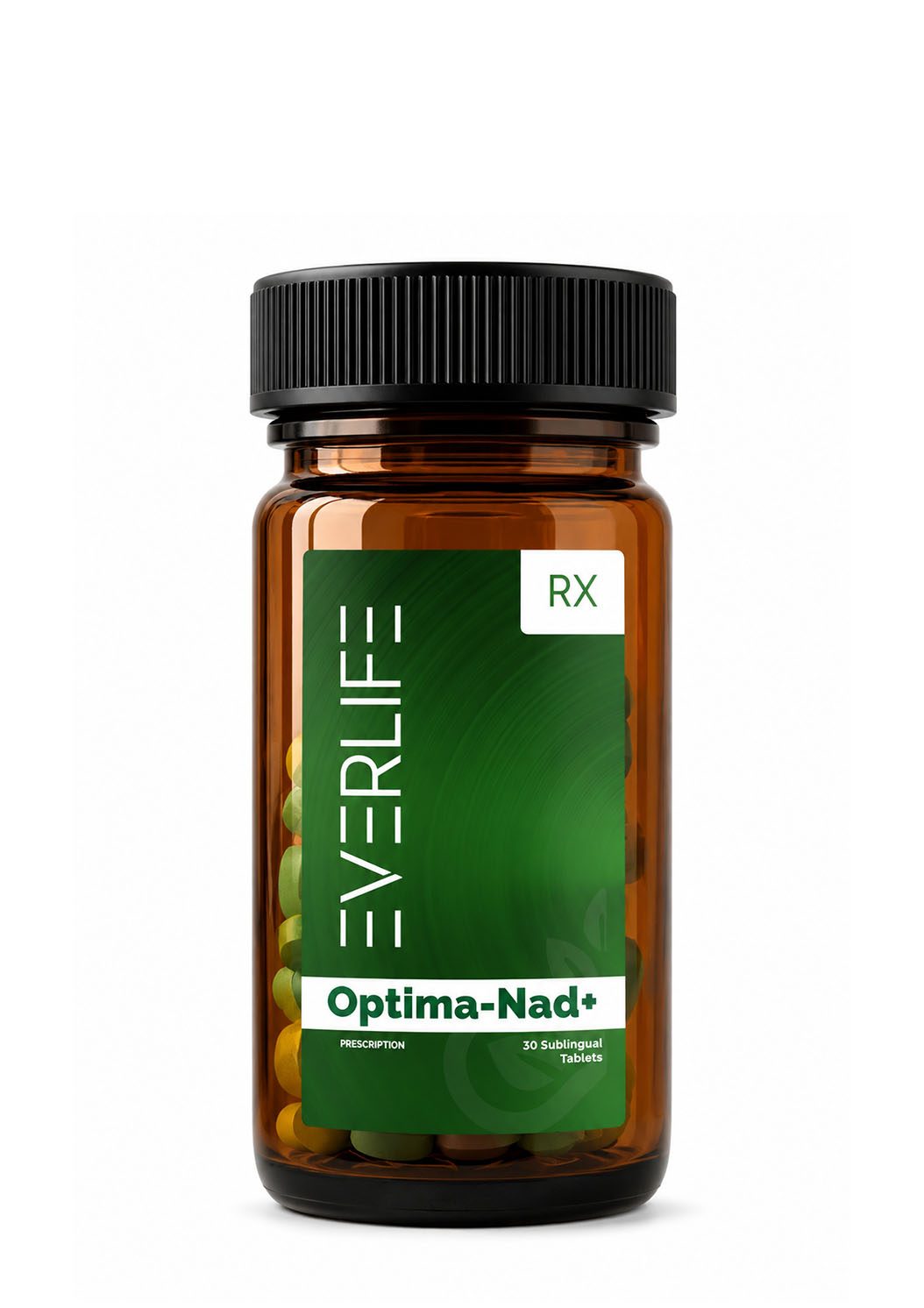
Everlife Optima-Nad+ bottle
Most "unexplained" fatigue turns out to be explainable — thyroid, ferritin, B12, and glucose control account for the majority of cases.

NAD+ and the mitochondrial story

NAD+ has become the headline molecule in longevity, and the hype has outrun the evidence in places. What's well established is narrower but still meaningful: NAD+ is essential to energy metabolism, it declines with age, and restoring it in animal models improves mitochondrial function and physical performance.

In humans, supplementation raises blood NAD+ reliably. What people report — and what we see clinically — is steadier daytime energy, better exercise recovery, and improved mental clarity rather than a dramatic switch being flipped. It's a floor being raised, not a stimulant.

What NAD+ is not: a replacement for sleep, a fat burner, or a substitute for treating an underactive thyroid. If something upstream is broken, fix that first.
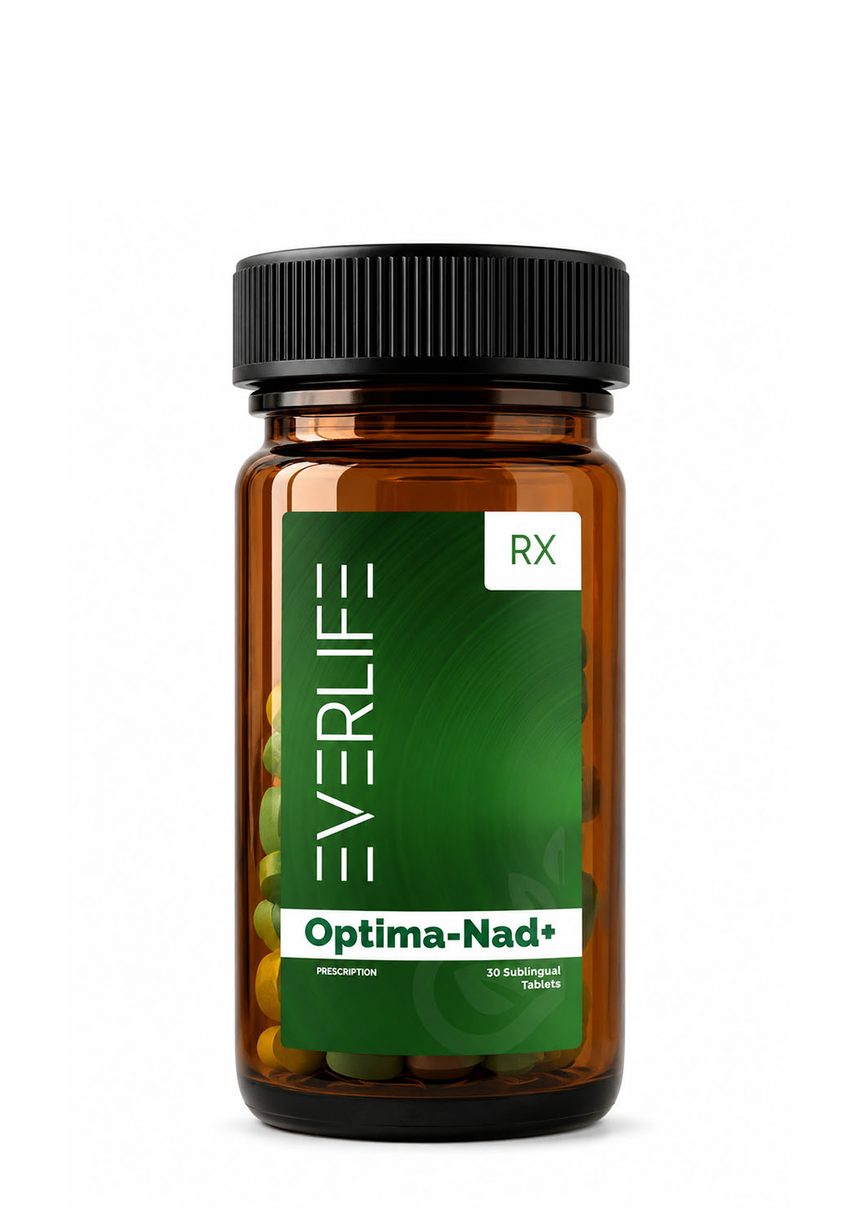
Everlife Optima NAD+
Longevity · Prescription

Optima-Rx NAD+

Physician-prescribed NAD+, dosed to support mitochondrial function, cellular repair, and steady daytime energy — often paired with B12 and glutathione based on your panel.

See the protocol →

Metabolic flexibility beats any supplement

The single best predictor of stable energy isn't how much fuel you have — it's how cleanly you switch between fuels. A metabolically flexible person burns fat at rest, shifts to glucose under intensity, and moves between the two without a crash. An inflexible one is dependent on the next meal.

Flexibility is trainable, and the levers are unglamorous:

  • Zone 2 cardio. Two to three hours a week at a conversational pace builds mitochondrial density better than anything else available.
  • Resistance training. More muscle means more mitochondria and a larger glucose sink.
  • Protein first at meals. Blunts the glucose spike that drives the afternoon crash.
  • A 12-hour overnight fast. Enough to let insulin fall without turning eating into a project.

What we actually recommend

Everlife's approach to energy starts with a panel and ends with the smallest effective set of interventions. In practice that usually means one to three items, each tied to a specific finding:

  • NAD+ where fatigue is diffuse, recovery is slow, and thyroid and iron are already adequate.
  • Vitamin B12 where levels are low or borderline — common in adults over 50 and anyone on metformin or a plant-based diet.
  • Glutathione as an antioxidant support alongside NAD+, particularly with high training load.
  • Hormone support where thyroid or sex hormones are the actual constraint.

If your panel shows nothing actionable, your provider will tell you that. Stacking supplements against normal labs is how people end up spending money to feel the same.

The unsexy fundamentals

No protocol survives a bad week of sleep. Before adding anything:

  • Anchor your wake time. A consistent alarm does more for daytime energy than a variable bedtime.
  • Get morning light. Ten minutes outside within an hour of waking sets the circadian signal that governs your cortisol curve.
  • Move after meals. A ten-minute walk measurably flattens the post-meal glucose spike.
  • Cap caffeine by early afternoon. It has a long tail, and it borrows energy rather than creating it.
  • Watch alcohol. Even two drinks meaningfully reduce deep sleep, which is where recovery is paid for.

Do those consistently for a month and you'll know how much of your fatigue was lifestyle and how much is worth testing. That's a useful thing to know before anyone writes a prescription.

Medical disclaimer. This article is for general educational purposes and is not medical advice. It does not establish a clinician-patient relationship and should not be used to diagnose or treat any condition. Talk with a licensed clinician about your own situation before starting or stopping any therapy.

Statements on this page have not been evaluated by the FDA. Prescription products require a consultation with a licensed medical professional, who will determine whether a prescription is appropriate. Results may vary.


Find where your energy is going

A free online visit and a full panel — thyroid, iron, B12 and metabolic markers — read by a licensed clinician.

9:41
iPhone 17 Pro · 402 × 874 pt

Home / Blog / Longevity

Longevity

Energy, metabolism and longevity

Fatigue is rarely a willpower problem — it's usually a metabolic signal. Here's how your cells make energy, why output drifts after 35, and what actually moves the needle.

A couple in their fifties walking a sunlit trail
Steady energy is a manufacturing story: how efficiently your cells turn food and oxygen into fuel, and what happens when that process gets less efficient.

Key takeaways

  • Fatigue is usually a metabolic signal, not a willpower problem.
  • Energy is made inside mitochondria — and mitochondrial output falls measurably with age.
  • NAD+, the coenzyme that powers that machinery, declines sharply from your thirties onward.
  • Metabolic flexibility — switching cleanly between fuels — predicts steady energy better than any supplement.
  • Labs first: thyroid, ferritin, B12, and glucose control explain most "unexplained" fatigue.

There's a particular kind of tiredness that doesn't respond to sleep. You get your eight hours, you wake up, and by mid-afternoon you're running on fumes anyway. Coffee stops helping around 35. Workouts that used to energize now flatten you for the rest of the day.

That's rarely a discipline problem. It's a supply problem — and supply, in a biological sense, means how efficiently your cells convert food and oxygen into usable fuel. Get curious about that machinery and fatigue stops being a mystery.

Where energy actually comes from

Every functional thing your body does — a heartbeat, a thought, a rep — is paid for in ATP. ATP is produced inside mitochondria, the small organelles packed most densely into the tissues that work hardest: heart, brain, and skeletal muscle.

Mitochondria don't just burn fuel; they manage it. They decide moment to moment whether to run on glucose or fat, they generate the byproducts that signal repair, and they're the first system to throttle back when something upstream is off — poor sleep, chronic stress, a nutrient gap, or inflammation.

Which is why fatigue is such a useful symptom. It's rarely the disease. It's the readout.

Energy isn't something you have. It's something your cells manufacture — and manufacturing has inputs.

The Everlife Clinical Team

Why it fades after 35

Three things drift at roughly the same time, and they compound.

Fewer, less efficient mitochondria

Mitochondrial density in skeletal muscle declines with age, and the remaining mitochondria become less efficient at producing ATP per unit of oxygen. The result is the same workload costing more.

Falling NAD+

NAD+ is the coenzyme that makes energy production possible in the first place — it shuttles electrons through the respiratory chain and powers the repair enzymes that keep cells intact. Tissue NAD+ levels fall substantially between your twenties and your fifties.

Hormonal drift

Thyroid output sets your metabolic pace. Testosterone and growth hormone maintain the muscle that houses your mitochondria. When those shift, energy follows — even when every individual lab still reads "normal."

The signals worth taking seriously

Some fatigue is just under-recovery. These patterns are worth investigating:

  • A hard 2–4pm crash, especially after a carbohydrate-heavy lunch.
  • Waking unrefreshed after adequate sleep, several days a week.
  • Cold hands and feet, dry skin, or thinning hair alongside the fatigue.
  • Losing your aerobic base faster than training explains.
  • Weight creeping up while your intake hasn't changed.

Each of those points somewhere specific — thyroid, iron, B12, blood-sugar control, or hormones. That's why the first move is a panel, not a purchase.

Everlife Optima-Nad+ bottle
Most "unexplained" fatigue turns out to be explainable — thyroid, ferritin, B12, and glucose control account for the majority of cases.

NAD+ and the mitochondrial story

NAD+ has become the headline molecule in longevity, and the hype has outrun the evidence in places. What's well established is narrower but still meaningful: NAD+ is essential to energy metabolism, it declines with age, and restoring it in animal models improves mitochondrial function and physical performance.

In humans, supplementation raises blood NAD+ reliably. What people report — and what we see clinically — is steadier daytime energy, better exercise recovery, and improved mental clarity rather than a dramatic switch being flipped. It's a floor being raised, not a stimulant.

What NAD+ is not: a replacement for sleep, a fat burner, or a substitute for treating an underactive thyroid. If something upstream is broken, fix that first.

Everlife Optima NAD+
Longevity · Prescription

Optima-Rx NAD+

Physician-prescribed NAD+, dosed to support mitochondrial function, cellular repair, and steady daytime energy — often paired with B12 and glutathione based on your panel.

See the protocol →

Metabolic flexibility beats any supplement

The single best predictor of stable energy isn't how much fuel you have — it's how cleanly you switch between fuels. A metabolically flexible person burns fat at rest, shifts to glucose under intensity, and moves between the two without a crash. An inflexible one is dependent on the next meal.

Flexibility is trainable, and the levers are unglamorous:

  • Zone 2 cardio. Two to three hours a week at a conversational pace builds mitochondrial density better than anything else available.
  • Resistance training. More muscle means more mitochondria and a larger glucose sink.
  • Protein first at meals. Blunts the glucose spike that drives the afternoon crash.
  • A 12-hour overnight fast. Enough to let insulin fall without turning eating into a project.

What we actually recommend

Everlife's approach to energy starts with a panel and ends with the smallest effective set of interventions. In practice that usually means one to three items, each tied to a specific finding:

  • NAD+ where fatigue is diffuse, recovery is slow, and thyroid and iron are already adequate.
  • Vitamin B12 where levels are low or borderline — common in adults over 50 and anyone on metformin or a plant-based diet.
  • Glutathione as an antioxidant support alongside NAD+, particularly with high training load.
  • Hormone support where thyroid or sex hormones are the actual constraint.

If your panel shows nothing actionable, your provider will tell you that. Stacking supplements against normal labs is how people end up spending money to feel the same.

The unsexy fundamentals

No protocol survives a bad week of sleep. Before adding anything:

  • Anchor your wake time. A consistent alarm does more for daytime energy than a variable bedtime.
  • Get morning light. Ten minutes outside within an hour of waking sets the circadian signal that governs your cortisol curve.
  • Move after meals. A ten-minute walk measurably flattens the post-meal glucose spike.
  • Cap caffeine by early afternoon. It has a long tail, and it borrows energy rather than creating it.
  • Watch alcohol. Even two drinks meaningfully reduce deep sleep, which is where recovery is paid for.

Do those consistently for a month and you'll know how much of your fatigue was lifestyle and how much is worth testing. That's a useful thing to know before anyone writes a prescription.

Medical disclaimer. This article is for general educational purposes and is not medical advice. It does not establish a clinician-patient relationship and should not be used to diagnose or treat any condition. Talk with a licensed clinician about your own situation before starting or stopping any therapy.

Statements on this page have not been evaluated by the FDA. Prescription products require a consultation with a licensed medical professional, who will determine whether a prescription is appropriate. Results may vary.

Find where your energy is going

A free online visit and a full panel — thyroid, iron, B12 and metabolic markers — read by a licensed clinician.